Placement
Building a Complete Feeding Station
A feeding station is not a pile of feeders. It is four feeding positions arranged around one baffled pole, at distances that keep birds safe and squirrels off.
The short answer
- A complete station is one baffled pole with two or three feeder arms, a ground tray beneath it, water within about 10 feet (3 m), and cover 10 to 12 feet (3 to 3.5 m) out.
- Build it in stages over a month. One feeder first, then the second arm, then the tray, then water. Birds accept additions faster than they accept a whole new installation.
- Site the pole 5 feet (1.5 m) up, 7 feet (2 m) or more from any launch point and 9 feet (2.7 m) below any overhead branch before you buy a single feeder.
- Variety comes from feeding positions, not from more seed. A vertical port, a flat tray, an upright suet cage and bare ground serve four different sets of birds.
- Concentrating birds means concentrating droppings. A station needs a cleaning circuit, not just a clean feeder.
A complete feeding station is one baffled pole carrying two or three feeders, a tray at ground level beneath it, water within about 10 feet (3 m), and cover at the outer edge. That is the entire design. It takes an afternoon of digging and a month of patience, and it will hold several times the variety of one feeder on a shepherd's hook.
The reason to gather everything around a single pole is control rather than abundance. One pole means one baffle to buy, one patch of ground to rake, one cleaning circuit and one window worth sitting at. Five feeders scattered around a yard give a squirrel five problems to solve and give you five.
This page covers the four feeding layers, the four distances that fix where the station goes, the order to build it in, where water belongs, and the mistake that quietly turns a busy station into a disease problem.
The four layers of a station#
Birds compete less for food than for feeding positions. A goldfinch wants to hang off a vertical port, a mourning dove wants flat ground to walk on, a woodpecker wants something upright to brace against. Offer all four positions and you collect all four groups without putting out a single extra pound of seed.
| Layer | Height | Typical feeder | Who uses it |
|---|---|---|---|
| Main arm | 5 to 6 ft (1.5 to 1.8 m) | Tube feeder, black oil sunflower | Chickadees, titmice, finches, nuthatches |
| Second arm | 5 to 6 ft (1.5 to 1.8 m) | Suet cage or peanut feeder | Woodpeckers, nuthatches, wrens |
| Third arm | 5 to 6 ft (1.5 to 1.8 m) | Hopper, or a nyjer tube for finches | Cardinals, jays, goldfinches, siskins |
| Ground | 0 to 12 in (0 to 30 cm) | Ground tray, millet and cracked corn | Juncos, doves, sparrows, towhees |
Two arms plus a ground tray covers most of what a typical yard can attract. The third arm is worth adding only if you have a species in mind, because every extra feeder is another surface to scrub.
Where the whole station goes#
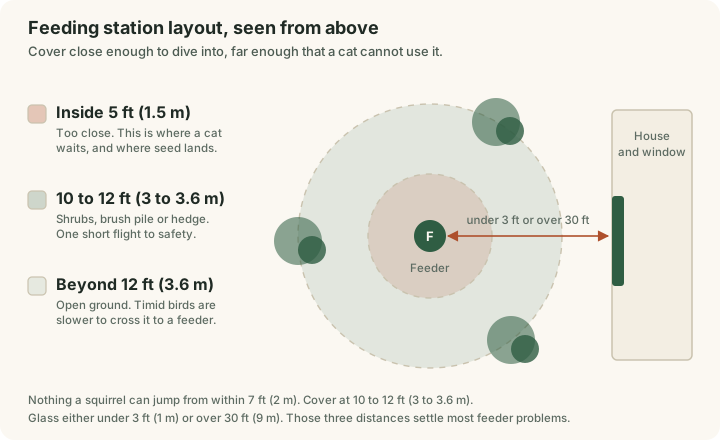
Four measurements decide the site, and they are the same four that govern any single feeder. Settle them before you dig, because a pole set in the wrong place is a weekend you do not get back.
- 10 to 12 feet (3 to 3.5 m) from cover. Close enough for a two second dash to a branch, far enough that a cat has no ambush point. The reasoning is set out in where to hang a bird feeder.
- Either under 3 feet (1 m) or over 30 feet (9 m) from glass. Very close, and a startled bird cannot build up lethal speed. Very far, and it is unlikely to read a reflection as sky. The middle distances kill birds, which is why feeders and windows is worth reading before you choose.
- 5 feet up, 7 feet out, 9 feet below. The squirrel geometry: 5 feet (1.5 m) of clear pole, 7 feet (2 m) or more from the nearest fence, roof or trunk, and 9 feet (2.7 m) of clear air above. Details in how to stop squirrels. Where space allows, use 10 feet (3 m) of horizontal clearance instead of 7.
- In view of a window you actually use. Not the guest room. The kitchen sink.
When the four distances conflict
Most yards cannot satisfy all four. Rank them in this order: window distance first, because it is a life or death issue for the birds; squirrel clearance second, because it decides whether the station works at all; cover third; your view last. A station 15 feet (4.5 m) from cover still works, just more slowly.
Build order#
Build in stages across four to six weeks. A station that appears all at once is a large unfamiliar structure. A station that grows by one feeder at a time is a place birds already know, with something new on it.
1. Set the pole#
A smooth steel pole, driven or set so it does not wobble, with the feeder bases landing at 5 feet (1.5 m). Wobble matters more than people expect: birds abandon a feeder that swings under them, and a leaning pole drops its baffle out of true. A pole you can wiggle by hand is a pole that needs resetting deeper or bracing with a second stake.
2. Fit the baffle before you hang anything#
A wraparound or torpedo baffle, wide enough that a squirrel cannot reach past it, with its top at about 4 to 4.5 feet (1.2 to 1.4 m). Sizing and mounting are covered in baffles: types, sizing and placement. Fitting the baffle first means squirrels never learn the station is worth attacking, which is much easier than teaching them it no longer is.
3. Hang one feeder and wait two weeks#
Start with a sunflower tube filled with black oil sunflower. It is the seed with the broadest appeal and it recruits the roaming chickadee flocks that lead everything else in. Expected timelines are in how long until birds find a new feeder.
4. Add the second arm#
Once the first feeder has steady traffic, add suet on the opposite side of the pole. Woodpeckers arrive on their own schedule and usually within a couple of weeks of the suet appearing.
5. Put the tray on the ground#
A low tray or a simple screen-bottomed platform set directly under the hanging feeders catches spillage and serves the ground feeders in the same move. Site it so you can lift it out and hose it, and never let seed sit on bare soil, which is how rodents get established.
6. Bring water in last#
Water is the addition that most changes what turns up, and it is the one people skip.
Water: the part that earns its keep#
A shallow dish 1 to 2 inches (2.5 to 5 cm) deep, with rough footing and gently sloping sides, brings in birds that will never touch a seed feeder: warblers, thrushes, catbirds, waxwings. Put it about 10 feet (3 m) from the feeders. Closer and you get hulls and droppings in the water. Much farther and it stops reading as part of the same place.
Moving water roughly doubles the draw, because birds locate water by sound as much as by sight. A dripper or a small solar wiggler is a cheap upgrade. Siting, depth and cleaning are in bird baths: the complete guide. In cold regions, a heated bath is the single most valuable thing at the station in January, as covered in winter water and heated bird baths.
Water needs cleaning more often than feeders do
A bird bath is a shared drinking vessel. Dump it, scrub the film off with a stiff brush and refill every two or three days in warm weather, and do not let it become a green-rimmed dish that birds drink from all summer.
Cover at the edge, not in the middle#
Cover is the fourth element and it is free. A shrub, a small tree, or a brush pile 10 to 12 feet (3 to 3.5 m) from the pole gives birds a staging perch to queue on and a bolt hole to use when a hawk passes over.
The mistake is putting cover too close. A shrub within a few feet of the feeder is a cat blind and a squirrel launch pad, and it defeats the horizontal clearance you set in step one. If your yard is bare, stack prunings into a loose pile as described in brush piles and cover. Birds will use it within days.
When one pole is not enough#
Three feeders on one pole is about the practical limit, for two separate reasons that people tend to blur together.
The first is aggression. Feeders hung close enough that one dominant bird can guard them all get monopolized, and a single grackle or house sparrow flock will hold a whole pole. The second is disease. Concentrating birds concentrates droppings, saliva and the seed they discard, which is exactly how salmonellosis and conjunctivitis spread between birds that would otherwise never meet.
If you want more than three feeders, run a second station 10 to 15 feet (3 to 4.5 m) away rather than crowding one pole. The full spacing argument is in how many feeders and how far apart.
Keeping a station clean#
A station needs a circuit, not a feeder wash. Every two weeks in mild weather, monthly in dry cold:
- Take down and wash every feeder, following how to clean a bird feeder.
- Lift and hose the ground tray, then let it dry fully before it goes back.
- Rake the hull mat from under the pole and bin it. Hulls hold moisture, kill grass and grow mold.
- Wipe the pole and the baffle top, which collect droppings from perching birds.
- Scrub the bath.
In hot, humid weather, or any time you see a sick bird, move to weekly.
Build the cleaning route into the design
Put every feeder within arm's reach from standing height and buy ones that come apart without tools. A station you can strip, wash and rehang in half an hour gets cleaned. One that needs a ladder and a screwdriver gets cleaned in April.
A station checklist#
Walk the finished station with a tape measure once, then leave it alone:
- Pole vertical and firm, feeder bases at 5 feet (1.5 m).
- Baffle fitted, nothing climbable within 7 to 10 feet (2 to 3 m), no branch within 9 feet (2.7 m) overhead.
- Nearest glass under 3 feet (1 m) or over 30 feet (9 m).
- Cover at 10 to 12 feet (3 to 3.5 m), not closer.
- Water at about 10 feet (3 m), shallow, cleaned every few days.
- Ground tray liftable, seed never sitting on bare soil.
- Every feeder reachable without a ladder, because the ones you need a ladder for do not get cleaned.
Frequently asked questions#
What do I need for a complete bird feeding station?
A smooth steel pole with a baffle, two or three hanging arms, a sunflower feeder, a suet feeder, a ground or low tray, and a shallow water source within about 10 feet (3 m). Cover such as a shrub or brush pile 10 to 12 feet (3 to 3.5 m) away completes it. Everything else is refinement.
How far apart should feeders be on a feeding station?
On a single pole, keep arms long enough that feeders hang at least 18 to 24 inches (45 to 60 cm) apart so birds are not feeding shoulder to shoulder. If you run more than three feeders, split them across two poles set 10 to 15 feet (3 to 4.5 m) apart to reduce both squabbling and disease transmission.
Should a bird bath be near the feeders?
Near, but not directly under them. About 10 feet (3 m) away is a good working distance: close enough that birds moving between food and water find both, far enough that hulls and droppings do not fall into the water. Keep the bath in the open with cover a short flight away.
How long does a new feeding station take to attract birds?
Usually a few days to three weeks, depending on whether birds already feed nearby. Chickadees and titmice tend to find it first and other species follow them. Building the station in stages helps, because each addition is a small change to a place birds already visit.
Can I put a feeding station on a deck or patio?
Yes, with a deck-mounted pole socket or a clamp-on rail system, though you give up the ground layer and you take on the mess directly underfoot. Use hull-free seed, fit catch trays under each feeder, and expect to sweep. A paved yard or deck is a good place for a two-arm station rather than a four-layer one.