Placement
Baffles: Types, Sizing and Placement
A baffle is the cheapest effective anti-squirrel device there is, and most of the ones in American yards are mounted too low, too small, or on the wrong side of the feeder.
The short answer
- The top of a pole baffle must sit at least 4 to 5 feet (1.2 to 1.5 m) above the ground, because a squirrel can jump about 5 feet vertically.
- Below-feeder baffles (stovepipe, torpedo, cone) go on poles. Above-feeder baffles (domes) go on hanging feeders. Using the wrong one wastes the money.
- A stovepipe needs to be at least 6 inches (15 cm) across and 15 to 18 inches (38 to 45 cm) long; a dome needs at least 15 to 18 inches (38 to 45 cm) of diameter.
- No baffle helps if the feeder is within 10 feet (3 m) of a fence, roof, branch or rail. Squirrels jump around baffles, not through them.
- Winter snowpack raises the ground and can turn a correctly set baffle into a useless one overnight.
A baffle is a physical barrier that a climbing animal cannot get past, mounted so that going around it is impossible too. That second half is where most installations fail.
Baffles come in three shapes. A stovepipe is a wide cylinder that hangs below a feeder on a pole and tips or spins under weight. A torpedo or cone is a tapered version of the same idea. A dome is a shallow inverted bowl that sits above a hanging feeder and shrugs off anything descending onto it.
The choice between them is set by your mount, not by preference. This page covers each type, the dimensions that matter, the 4 foot rule for mounting height, and the errors that turn a working baffle into an ornament.
What a baffle actually does#
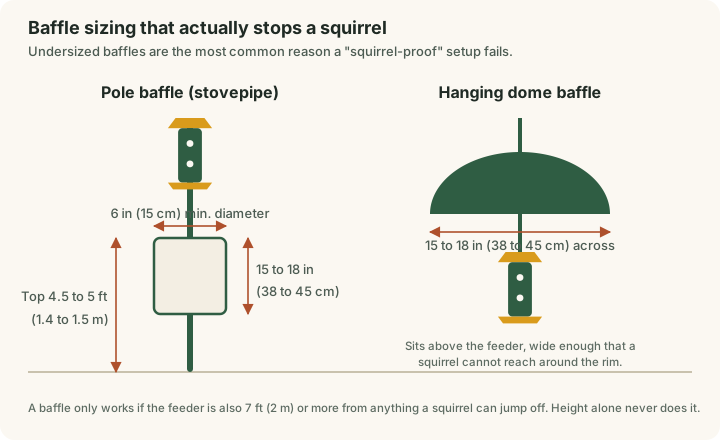
It defeats a specific behavior. Squirrels approaching from below climb the pole, so a below-feeder baffle presents a wide overhanging rim they cannot reach around and a surface that tilts or rotates when they try.
Squirrels approaching from above come down the hanging wire or drop from a branch, so an above-feeder baffle presents a slippery convex dome with no grip and a diameter wide enough that they cannot reach the feeder from the edge.
That is the whole mechanism. It is not a deterrent, and it does not rely on the squirrel giving up. It relies on geometry, which is why the measurements below are not suggestions.
Baffle type versus mount type#
| Baffle type | Position | Fits | Minimum size | Stops |
|---|---|---|---|---|
| Stovepipe (cylinder) | Below feeder | Poles, 1 in (2.5 cm) or similar | 6 in (15 cm) wide, 15 to 18 in (38 to 45 cm) long | Squirrels, most raccoons, chipmunks |
| Torpedo | Below feeder | Poles | 15 to 18 in (38 to 45 cm) at the widest point | Squirrels, chipmunks |
| Cone (wraparound) | Below feeder | Poles, some posts | 15 to 18 in (38 to 45 cm) across | Squirrels; less reliable on raccoons |
| Dome | Above feeder | Hanging wires, chains | 15 to 18 in (38 to 45 cm) across, 18 in better | Squirrels dropping from above; also sheds rain |
| Wraparound tree baffle | On the trunk | Tree trunks, posts | Full trunk circumference, 24 in (60 cm) tall | Squirrels climbing a trunk |
Note the mismatch that costs people money: a dome hung above a feeder that stands on a pole does nothing about the squirrel walking up the pole, and a stovepipe attached to a hanging feeder does nothing about the squirrel coming down the wire. Match the baffle to the direction of attack, which is decided by your mounting method.
Stovepipe baffles#
The most effective type for a pole. A cylinder 6 to 8 inches (15 to 20 cm) in diameter and 15 to 18 inches (38 to 45 cm) long, hung from a bracket so it can tilt and swing rather than being clamped rigid.
Length is what makes it work. A squirrel that jumps and catches the lower rim finds itself hanging on a long tube that tips sideways, with no way to reach the pole above. A short stovepipe of 8 or 10 inches (20 to 25 cm) gives a squirrel enough reach to grab past it.
The mounting hardware matters just as much: a stovepipe fixed rigidly to the pole becomes a step. It should hang loose.
The 4 foot rule
Measure to the top edge of the baffle, and get it at least 4 feet (1.2 m) off the ground. Four and a half to 5 feet (1.4 to 1.5 m) is better. A gray squirrel jumps roughly 5 feet vertically from a standstill, so anything lower is cleared without effort. This is the single most common baffle error.
Torpedo and cone baffles#
Torpedoes are tapered cylinders, wide at the base and narrowing at the top, that shed a squirrel down the slope. Cones are shallower and open underneath.
Both work on poles and both are less effective than a good stovepipe, mainly because they offer less vertical length to defeat a reaching squirrel. Their advantage is bulk: a torpedo takes less wind than a full stovepipe and looks less industrial, which matters to some people more than a few percent of effectiveness.
Cones are the usual choice for wrapping around a wooden 4x4 post, where a stovepipe will not fit. On a post, check that the cone seals against the wood; a gap at the back is a route through.
Dome baffles#
Domes hang above the feeder on the same wire or chain. Their job is to stop squirrels that drop from a branch or descend the hanging line, and they also keep rain off the feeder, which is a genuine secondary benefit for suet and seed alike.
Diameter is the specification that matters. Anything under about 15 inches (38 cm) leaves a squirrel able to hang from the rim and reach the feeder below. Eighteen inches (45 cm) is a better target, and the feeder should hang close enough beneath the dome that the gap is not a perch.
Domes will not stop a squirrel that can jump directly at the feeder from the side, which is why the horizontal clearance rule matters just as much here.
The clearance that makes any baffle work#
A baffle blocks a vertical route. It does nothing about a horizontal one.
Keep the feeder at least 10 feet (3 m) from any branch, fence rail, roof edge, deck railing, trellis, wall or parked object a squirrel can launch from. The commonly taught shorthand is the 5-7-9 rule: 5 feet up, 7 feet out, 9 feet down from an overhead branch. Treat the 7 as a minimum and aim for 10 feet of clear air, since a squirrel launching downhill from a fence carries momentum that a flat measurement ignores. The behavior behind those numbers is covered in how to stop squirrels raiding feeders, and the height reasoning in how high a bird feeder should be.
Snow changes your measurements
Two feet (60 cm) of packed snow raises the effective ground level by two feet, turning a 4.5 foot baffle into a 2.5 foot baffle. It also builds ramps against fences and buries the gap between the feeder and a shrub. Shovel out around the pole after heavy snow, or expect a January surprise.
Five installation errors#
- Baffle too low. Almost always the problem. Top edge under 4 feet (1.2 m) and the squirrel simply jumps it.
- Baffle mounted rigid. A baffle that cannot tilt or spin is a platform. Hang stovepipes from a loose bracket.
- Wrong side of the feeder. Dome above for hanging feeders, stovepipe below for poles. Exposed on both sides means you need both.
- Undersized. Narrow domes and short stovepipes let a squirrel reach past the rim. Buy the wider one.
- Clearance ignored. A perfect baffle 6 feet from a fence is decoration. Measure the horizontal distance before you buy anything.
When a baffle is not enough#
Some situations defeat the geometry. Wooded lots with no open ground, small yards ringed by fences, and decks with railings on all sides may not offer any spot with 10 feet of clearance.
In those cases, stack defenses instead. A weight-activated squirrel-proof feeder closes its ports under a squirrel's weight and does not depend on clearance. Switching seed to safflower removes much of the incentive, since most squirrels dislike it while cardinals and finches eat it readily. And clearing spilled seed below the feeder cuts the traffic that draws chipmunks and rodents in the first place.
For nocturnal raiders, a large stovepipe on a smooth pole handles most raccoons, but bringing feeders in at dusk is the only certain answer. In bear range, no baffle is relevant at all: see bird feeders and bears.
Keeping a baffle working#
- Re-check the top edge height every spring, after frost heave, and after every significant snowfall.
- Confirm the baffle still tilts and spins freely; grit and rust seize the bracket.
- Re-measure horizontal clearance each year, because hedges grow and a shrub that was 12 feet away is now 8.
- Watch the pole for scratch marks above the baffle, the clearest sign that something is getting past it and that the problem is clearance, not the baffle.
If you would rather build than buy, the dimensions above transfer directly to a homemade version: see DIY squirrel baffle. And if you are assembling a setup from scratch, get the siting right first using where to hang a bird feeder, then fit the baffle to the mount you chose.
Frequently asked questions#
How high should a squirrel baffle be?
The top of the baffle should be at least 4 feet (1.2 m) above the ground, and 4.5 to 5 feet (1.4 to 1.5 m) is safer. A gray squirrel can jump roughly 5 feet straight up from a standing start, so a baffle whose top is at 3 feet simply gets cleared. Measure to the top edge, not the bottom.
What size baffle do I need?
For a pole, a stovepipe at least 6 inches (15 cm) in diameter and 15 to 18 inches (38 to 45 cm) long. For a hanging feeder, a dome at least 15 to 18 inches (38 to 45 cm) across. Undersized baffles let a squirrel reach past the rim or grip the pole above them.
Dome or stovepipe baffle: which is better?
They solve different problems. A stovepipe or torpedo goes below the feeder on a pole and blocks climbing from underneath. A dome goes above a hanging feeder and blocks squirrels dropping from a branch or sliding down the wire. If a feeder is exposed from both directions, you need both.
Why is my squirrel baffle not working?
In order of likelihood: it is mounted too low, the feeder is within jumping range of a fence, branch or roof, the baffle is too narrow, or it is fixed rigidly instead of being free to tilt and spin. Check the horizontal clearance first, since 10 feet (3 m) of clear air in every direction does more than any baffle.
Do baffles stop raccoons?
A large stovepipe on a smooth pole stops most raccoons, but they are heavier, stronger and more persistent than squirrels, and a marginal baffle that holds a squirrel may not hold a raccoon. The reliable answer in raccoon country is to bring feeders in at dusk.
Can I make my own baffle?
Yes. A length of stovepipe or wide PVC with a cap and a simple hanging bracket makes an effective pole baffle, and an upturned bowl or a plastic dome makes a serviceable overhead one. The key is keeping the dimensions and mounting height the same as a bought one.