Problem Solving
How to Stop Squirrels Raiding Feeders
Almost every squirrel problem is a placement problem wearing a feeder costume. Fix the geometry first, then the hardware, then the seed.
The short answer
- Position beats hardware. A feeder 5 feet (1.5 m) up, 7 feet (2 m) or more from any launch point and 9 feet (2.7 m) below an overhanging branch defeats most squirrels before you spend anything.
- A baffle only works if it is big enough and high enough: a pole baffle should sit with its top around 4.5 to 5 feet (1.4 to 1.5 m) up, and a dome should be at least 15 to 18 inches (38 to 45 cm) across.
- Safflower seed is the cheapest food-based deterrent and most cardinals, chickadees and titmice eat it happily. Squirrels in some yards learn to tolerate it.
- Never grease a pole. Oil, petroleum jelly and cooking spray mat feathers and destroy their waterproofing, which can kill a bird in cold or wet weather.
- Capsaicin-treated seed exploits a real difference between bird and mammal taste receptors, but the dust is an irritant and some wildlife bodies and jurisdictions discourage it. Treat it as a last resort, not a first move.
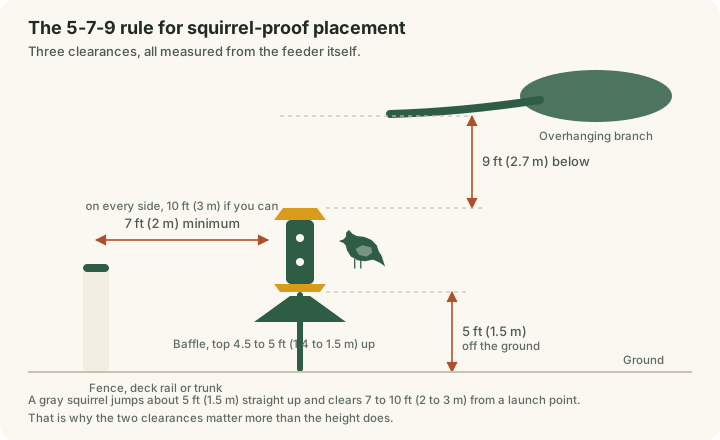
A gray squirrel can jump roughly 5 feet (1.5 m) straight up from flat ground, clear 7 to 10 feet (2 to 3 m) horizontally from a launch point, and drop 9 feet (2.7 m) or more onto a feeder without hurting itself. Every reliable defense is built around those three numbers. Feeder design is a secondary concern and seed choice is a third.
That is the whole answer, and it is why two people can buy the same feeder and get opposite results. The one who hung it from a tree branch is feeding squirrels. The one who put it on a smooth pole in open ground with a properly sized baffle is feeding birds.
This page covers how to confirm squirrels are actually your culprit, the 5-7-9 geometry in detail, how to size and mount a baffle so it works, where safflower and pepper-treated seed genuinely fit, and the popular tricks that fail, waste money, or injure wildlife.
First, confirm it is squirrels#
Squirrels are blamed for damage they did not do, and the fix differs by animal. Work through the evidence before you buy anything.
| What you see | Most likely culprit | Where to go next |
|---|---|---|
| Seed gone in daylight, you have watched it happen | Gray or fox squirrel | This page |
| Feeder empty by morning, hardware intact, lid flipped | Raccoon | Keeping raccoons off feeders |
| Pole bent, feeder on the ground, bracket torn | Bear or a large mammal | Bird feeders and bears |
| Cheeks bulging, seed vanishing into a hole in the lawn | Chipmunk | Chipmunks at the feeder |
| Spilled seed disappearing overnight, droppings below | Mice or rats | Rodents under bird feeders |
| Feeder emptied at dusk, tall browse line on shrubs | Deer | Deer eating bird seed |
| Plastic ports chewed into a wide hole | Squirrel, historically | Replace with metal ports |
If the level drops steadily through the day with no visible thief, check for a gnawed port before you blame an animal at all. The seed may simply be pouring out. That diagnostic sequence is laid out in my feeder empties overnight.
The 5-7-9 rule#
The rule is a memory aid for three clearances that a squirrel has to beat at once.
- 5 feet up. The bottom of the feeder sits at least 5 feet (1.5 m) above the ground, above a standing jump from below.
- 7 feet across. Nothing within 7 feet (2 m) horizontally offers a launch: no fence rail, deck post, trellis, tree trunk, low roof, wheelbarrow, stack of firewood, or the trash can you moved there in March.
- 9 feet below. No branch, gutter, wire or eave within 9 feet (2.7 m) above the feeder. Squirrels drop far more readily than they climb, and they aim well.
Treat 7 feet as the minimum, not the target. A squirrel launching downhill from a raised deck or a roofline is adding gravity to the jump, and 10 feet (3 m) of clearance is the honest working number in that situation. Measure with a tape rather than eyeballing it; almost everyone's estimate is short. The wider siting trade-offs, including distance from cover and from windows, are in where to hang a bird feeder.
The launch point you forgot
Walk a circle around the feeder and look at it from every waist-high surface. Squirrels use things people do not think of as furniture: a sapling that has grown two feet since spring, a hanging basket, a snowdrift in February. Winter snow raises the effective ground level and quietly cancels your 5 feet of height.
Baffles: sizing, type and mounting height#
A baffle is a physical barrier on a pole or above a hanging feeder. It is the highest-value purchase in this whole article, and most that fail were installed wrong rather than built wrong.
Pole baffles come as torpedo or wraparound cylinders and as tilting cones or domes that slide over the pole. What matters is length and mounting height. A cylinder baffle wants to be roughly 15 to 18 inches (38 to 45 cm) long, and the top of any pole baffle should sit around 4.5 to 5 feet (1.4 to 1.5 m) off the ground so a squirrel standing at full stretch cannot reach past it. A cone or dome should be at least 15 to 18 inches (38 to 45 cm) in diameter. Tilting or wobbling designs work better than rigid ones because they deny a foothold.
Hanging baffles sit above the feeder on the same hook and act as an umbrella. Same minimum diameter, and it needs to be wide enough that a squirrel sliding down the chain cannot reach around the rim to the feeder below.
The pole itself matters. Smooth steel or aluminum, no rough welds, no decorative scrollwork, no cable ties or hose clamps for a foot to catch on. A wooden 4x4 post is a ladder. Full sizing detail, including which baffle suits which mount, is in baffles: types, sizing and placement.
The fixes, ranked by value#
Work down this list. Stop when the problem stops.
| Fix | Rough cost | How well it works | Notes |
|---|---|---|---|
| Move the feeder to clear 5-7-9 | Free | Very high | The single best change most people can make |
| Pole baffle, correctly sized and mounted | Low | Very high | Near total when combined with good placement |
| Hanging dome baffle | Low | High | Needs 15 in (38 cm) or more of diameter |
| Switch to safflower | Low | Moderate to high | Deters many squirrels; some tolerate it |
| Metal-collared ports | Low | Moderate | Prevents damage rather than access |
| Weight-activated feeder | Moderate | Moderate | Only if also out of jumping range |
| Caged feeder over a tube | Moderate | Moderate to high | Also excludes larger birds |
| Capsaicin-treated seed | Moderate | Variable | Irritant dust; discouraged in some places |
| Ultrasonic or motion repellents | Moderate | Negligible | No reliable evidence in yards |
| Greasing the pole | Free | Harmful | Never do this |
Where safflower and pepper seed fit#
Safflower seed is the most useful food-based deterrent available. It is bitter, and most squirrels reject it, while northern cardinals, chickadees, titmice, house finches and doves take it readily. Grackles and starlings tend to dislike it too, which is a useful side effect. Switch gradually by mixing safflower into sunflower over two weeks, because birds are slow to try unfamiliar seed.
The honest caveat: safflower is not squirrel-proof. In yards where squirrels are numerous or hungry, and where a generation has grown up on it, they eat it. It buys you a strong layer, not immunity.
Capsaicin-treated seed and suet work on a genuine physiological difference. The receptor that makes chili burn in mammals responds differently in birds, so squirrels find treated seed aversive while cardinals and finches appear indifferent. That much is well established.
Why pepper products are a last resort
Capsaicin dust gets into eyes and airways, yours as much as the squirrel's, especially when you pour on a windy day. There is reasonable concern that a bird can transfer the powder to its own eyes while preening. Several wildlife and welfare organizations discourage pepper-treated products, and in some jurisdictions a substance added to seed to repel an animal is regulated as a pesticide. Check your state or provincial guidance before buying, wear gloves and a mask if you use it, and prefer geometry and safflower first.
What does not work, and why#
Greasing the pole. Petroleum jelly, cooking spray, axle grease and oil all appear in old advice. Any of them will mat the interlocking barbs of a bird's feathers, which is what makes a feather waterproof and insulating. A bird cannot preen it out, and a soaked, unable-to-insulate bird in cold weather often dies. Use a smooth pole and a baffle, which works better and harms nothing.
Fishing line and monofilament. Strung line, thread and netting hung around a feeder is an entanglement hazard. Birds, squirrels and bats get caught in it, and the injuries are typically severe. The same objection applies to loose bird netting draped over feeders.
Spinning, tilting and shock-based deterrents. Motorized feeders that fling a squirrel off a perch entertain people and can injure the animal, especially on hard ground or from height. A wobbling baffle achieves the same exclusion without throwing anything.
Most blanket "squirrel-proof" claims. Weight-activated feeders are genuinely useful when calibrated and mounted correctly, and useless when hung from a branch. Squirrels beat them by hanging upside down from the cap, chewing plastic housings, or weighing too little as juveniles to trip the closure. Read the honest assessment in squirrel-proof feeders.
Trapping and relocating. In many states and provinces it is illegal to relocate wildlife, and relocated squirrels usually die: they lose their cached food, their territory and their shelter before winter. What five states actually allow, including Colorado's 10 mile exception, is set out in can you trap and relocate a squirrel. Poison is never acceptable near a feeder and endangers hawks, owls, pets and children.
Cut the spill, cut the visits
Squirrels are drawn as much by ground spill as by the feeder itself. A catch tray under the feeder, hull-free seed and a weekly sweep remove the reason they come looking. The tactics in seed mess, hulls and dead grass do double duty here.
A setup that works#
If you want one configuration to copy:
- A smooth steel pole set in open ground, feeder base at 5 feet (1.5 m), nothing climbable within 10 feet (3 m), no branch within 9 feet (2.7 m) overhead.
- A wraparound or tilting baffle 15 to 18 inches (38 to 45 cm) long, with its top at 4.5 to 5 feet (1.4 to 1.5 m).
- A metal-ported tube feeder filled with black oil sunflower, or safflower if squirrel pressure is heavy.
- A catch tray below, emptied and swept weekly.
- Seed stored in a sealed metal or hard plastic container, since a chewed bag in the garage teaches squirrels where the buffet lives. See storing bird seed.
Give the setup two weeks before you judge it. Squirrels test a new arrangement persistently at first, then largely give up on the ones that never pay off. The full build sequence, including how to combine several feeders on one baffled pole, is in building a complete feeding station.
Frequently asked questions#
What is the 5-7-9 rule for squirrels?
Hang the feeder at least 5 feet (1.5 m) above the ground, at least 7 feet (2 m) horizontally from anything a squirrel can launch from, and at least 9 feet (2.7 m) below any overhead branch. Those three distances bracket the jumping ability of a gray squirrel. Because a squirrel launching downhill from a fence or roof can clear more than 7 feet, aim for 10 feet (3 m) of clearance if the space allows.
Do squirrels eat safflower seed?
Most squirrels avoid safflower because of its bitter coating, and it is the single cheapest thing you can change. It is not absolute: hungry squirrels, and squirrels that grew up on it, will eat safflower. Treat it as one layer of a system rather than a solution on its own.
Does hot pepper birdseed hurt birds?
Birds do not react to capsaicin the way mammals do, because the receptor that registers the burn works differently in birds, so treated seed is aversive to squirrels and not to cardinals or chickadees. The concerns are practical rather than dietary: the dust irritates eyes and airways, it can irritate a bird that gets it into its eyes while preening, and some wildlife and welfare organizations discourage the products. Some places also regulate pepper-treated seed as a pesticide, so check local guidance. The label strengths and trial results are in is hot pepper bird seed safe for birds?
Does greasing a pole keep squirrels off?
It sometimes stops the squirrel and it can kill birds, so the answer is no. Grease, oil and petroleum jelly mat the feather structure that keeps a bird waterproof and insulated, and a bird cannot preen it out. Use a smooth metal pole and a baffle instead, which works better anyway.
Are squirrel-proof feeders worth buying?
A weight-activated feeder is a reasonable second line of defense, but only if it is also placed out of jumping range. Squirrels defeat them by hanging from above, chewing plastic ports, or simply being a lightweight juvenile that does not trip the mechanism. Spend on a pole and baffle before you spend on the feeder.
Should I feed squirrels somewhere else to distract them?
It rarely reduces feeder raids. A corn feeder in the far corner of the yard usually raises the number of squirrels living in the area, and squirrels visit both. If you enjoy them, feed them by all means, but do not expect it to protect the seed.