Care and Safety
How Often to Clean Bird Feeders
Every two weeks is the usual advice. It is a reasonable default and it is wrong in both directions: too rare for nectar in July, too often for a dry tube in January.
The short answer
- Default to every two weeks for seed feeders, monthly in dry cold weather, and weekly in hot humid weather or when traffic is heavy.
- Nectar feeders are on a completely different clock: every 2 days above 85°F (29°C), every 3 to 4 days in mild weather.
- Any of these means clean today: a sick bird, wet or clumped seed, visible droppings on perches, or a local disease report.
- The full method every time is scrub, soak 10 minutes in 1 part bleach to 9 parts water, rinse thoroughly, dry completely.
- Rain is a bigger driver than the calendar. Three wet days can undo a clean feeder faster than three dry weeks.
Clean seed feeders every two weeks as a baseline. Clean weekly in hot humid weather, after several days of rain, or when the feeder is busy. Stretch to monthly only in dry freezing conditions. Clean nectar feeders every 2 days above 85°F (29°C) and every 3 to 4 days below it. Clean any feeder immediately if you see a sick bird, wet seed or droppings on the perches.
That is the short answer. The longer one is that the calendar is a poor guide, because what actually degrades a feeder is moisture, warmth and bird density, and those three vary enormously between a shaded deck in Florida and a windswept pole in Minnesota.
This page gives a schedule by feeder type, the adjustments for season and weather, and the specific triggers that override everything else. The method itself, with dilution ratios and drying times, is in how to clean a bird feeder.
The baseline schedule by feeder type#
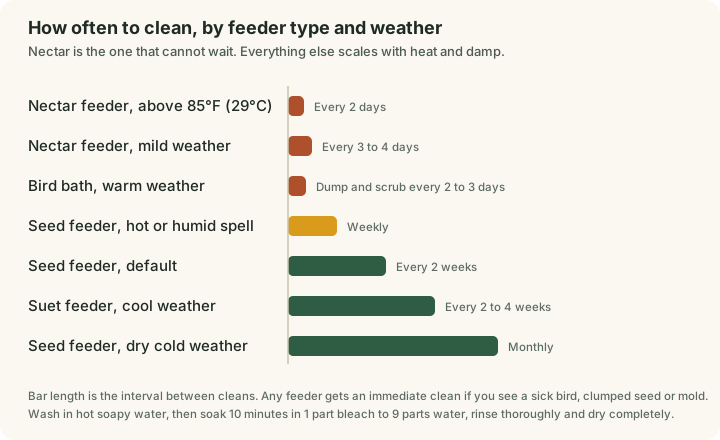
These intervals assume moderate traffic and ordinary weather. Adjust with the season and weather multipliers in the next two sections.
| Feeder type | Typical interval | The part that fails first |
|---|---|---|
| Tube feeder | Every 2 weeks | Seed in the dead space below the lowest port |
| Hopper feeder | Every 2 weeks | Corners of the reservoir, roof joint |
| Platform or tray feeder | Weekly | Open surface collects rain and droppings |
| Suet feeder | Every 2 to 4 weeks | Rancid fat film on the cage |
| Nyjer feeder | Every 2 weeks | Clogged ports, seed caking from oil |
| Nyjer mesh sock | Replace every 4 to 8 weeks | Cannot be disinfected; discard it |
| Peanut feeder | Every 2 weeks | Wet peanut residue in the mesh |
| Hummingbird feeder | Every nectar change | Fermented nectar, mold in ports |
| Oriole or jelly feeder | Every 1 to 3 days in warmth | Jelly ferments and draws insects |
| Ground feeder or catch tray | Weekly | Contact with soil, droppings, rodents |
| Bird bath | Every 2 to 3 days | Biofilm, algae, droppings |
Platform feeders and ground trays need the most attention because they offer no protection from rain and every bird stands directly in the food. That is the price of the open design, not a defect.
How season changes the interval#
Temperature and humidity are what drive spoilage, so the same feeder needs very different attention in July and January.
Summer is the demanding season. Heat and humidity accelerate bacterial and fungal growth, seed oils go rancid faster, and nectar ferments in a day or two. Move seed feeders to weekly and consider running them half full so the seed turns over quickly. Summer bird feeding covers the wider set of hot-weather adjustments.
Spring and fall sit near the two-week baseline, with two caveats. Spring rain is persistent in much of the country, and fall migration puts unfamiliar birds through your yard in numbers, which is exactly when disease moves between populations. Feeding birds during migration explains why the crowding matters.
Winter is the easiest season for hygiene and the busiest for traffic. Frozen seed does not mold. If your winters are genuinely cold and dry, monthly is defensible. If your winters cycle above and below freezing, thawing wets the seed repeatedly and you are back to every two weeks. Feeders are also at their most crowded in cold snaps, which is a good reason not to relax entirely.
The real driver is water
Dry seed in a dry feeder is stable for weeks. The moment moisture gets in, whether from rain, snowmelt, condensation or a bird with wet feathers, the clock starts. If you want one rule instead of a schedule, it is this: inspect the feeder after every significant rain and clean it if anything inside is damp.
Weather adjustments#
Apply these on top of the baseline.
- Three or more days of rain: clean now, regardless of when you last did. Wet seed in a feeder is a mold culture and the route to moldy, clumped seed.
- Sustained heat above 85°F (29°C): halve the interval for seed, and treat nectar as a 2 day product.
- High humidity without rain: humid coastal and Gulf summers spoil seed nearly as fast as rain does. Weekly.
- Dry cold below freezing: you can double the interval, but still empty and check the base at each refill.
- Snow packing into ports or trays: clear it out rather than letting it melt into the seed.
The triggers that override the schedule#
Some things mean you clean today, not on the schedule.
- A sick bird. Fluffed up, lethargic, slow to flush, crusted or swollen eyes, or visible difficulty swallowing. Take the feeders down, clean everything, and read there is a sick bird at my feeder.
- A dead bird at or under the feeder. Same response, and handle the carcass with gloves or an inverted bag.
- Wet, clumped or caked seed anywhere in the feeder.
- Visible droppings on perches, ports or the tray. Droppings in the food are the direct transmission route for salmonella.
- A local disease report. State wildlife agencies sometimes ask people to take feeders down during a salmonellosis or avian influenza event. Follow that advice; it is the one intervention that reliably works.
- Finches with swollen or crusted eyes, the sign of house finch eye disease, which spreads at feeder surfaces more than through the air.
Take feeders down, do not just clean them
When there is active disease in your yard, cleaning alone is not enough, because the birds keep gathering. Removing feeders for one to two weeks disperses the flock and interrupts transmission. It sounds drastic and it is the single most effective thing you can do. Birds will return within days of the feeders going back up.
Fitting it into a routine that survives February#
A schedule you keep beats a better one you abandon. Three things make it stick.
Attach it to the refill. Most people refill on a rough rhythm already. Make every second or third refill a cleaning, and you never have to remember a date.
Own a spare feeder. Swap the clean one in and bring the dirty one inside to dry on its own schedule. This removes the main excuse, which is not wanting to leave the birds without food while a feeder dries.
Size the feeder to your traffic. A feeder that holds three weeks of seed for your yard is not a convenience, it is a mold incubator. Most yards want a feeder that empties in about a week, an argument made at length in feeder size and capacity.
Run feeders half full in summer
From June through September, fill seed feeders to about half capacity. Seed turns over faster, less of it sits absorbing humidity, and the feeder is lighter to take down for its weekly clean. You are not feeding fewer birds, just holding less inventory outdoors.
What to do this week#
If you have not cleaned in a while, work in this order:
- Pull every feeder down and empty it into the trash, not into your seed bin.
- Full method on each one: scrub with hot soapy water, soak about 10 minutes in 1 part bleach to 9 parts water, rinse thoroughly, dry completely. The options and their limits are in safe disinfectants for feeders.
- Rake the hull layer from under each feeder and bag it.
- Wipe down poles, hooks and hangers where birds perch.
- Check your seed store for clumping or a rancid smell, and reseal it properly per storing bird seed.
- Put a repeating reminder in your calendar at the interval your climate calls for, then adjust after the first wet spell.
Once you have a rhythm, the whole cycle takes 20 to 30 minutes a fortnight for a typical two or three feeder yard. That is the real cost of feeding birds responsibly, and it is lower than most people fear.
Frequently asked questions#
How often should you clean a bird feeder?
Every two weeks is the sensible default for seed feeders. Move to weekly in hot humid weather, after heavy rain, or when a feeder is busy, and you can stretch to monthly in dry freezing conditions when seed stays dry. Nectar feeders need cleaning at every nectar change, which in summer means every 2 days.
Do I need to clean bird feeders in winter?
Yes, just less often. Cold slows bacterial growth and dry frozen seed keeps well, so monthly is usually enough in a genuinely cold dry climate. But freeze and thaw cycles wet the seed repeatedly, and winter is when feeder traffic peaks, so check the feeder every refill and clean on sight of clumping or droppings.
How often should hummingbird feeders be cleaned?
At every nectar change, with no exceptions. That means every 2 days when the temperature is above roughly 85°F (29°C), and every 3 to 4 days in mild weather. Sugar water ferments and grows mold quickly in heat, and a feeder that looks clear can already be culturing yeast.
Should I clean a bird feeder if a bird died nearby?
Yes, immediately, and take the feeder down for a week or two while you do. Clean and disinfect every feeder in the yard with a 10 minute soak in 1 part bleach to 9 parts water, rake up the debris underneath, and watch for further sick birds before you rehang. Taking feeders down temporarily disperses birds and breaks the transmission chain.
Is it bad to clean a bird feeder too often?
No, other than the wear on the feeder and your time. Frequent cleaning does not harm birds, and the brief gap while the feeder dries does not hurt them either, because feeder birds forage widely and do not depend on any one source. The realistic risk is the opposite one: setting a schedule so demanding you abandon it.
How often should I clean a suet feeder?
Every two to four weeks in cool weather and more often in warmth, because rendered fat goes rancid and coats the cage. Hot soapy water is essential here before any disinfectant, since bleach solution simply sits on top of a grease film without reaching the surface.