Bird Food
Hummingbird Nectar Recipe
Four parts water, one part plain white sugar, nothing else. The recipe takes two minutes; almost everything that goes wrong with a hummingbird feeder happens after that.
The short answer
- Mix 4 parts water to 1 part plain white granulated sugar. Nothing else belongs in the bottle.
- No red dye: it is unnecessary because feeders already have red parts, and it has not been studied at feeder concentrations.
- No honey, no brown or raw sugar, no molasses, no artificial sweeteners. Honey ferments and grows fungus, unrefined sugars carry iron, and sweeteners have no calories at all.
- Boiling is optional. It extends the refrigerated shelf life of a batch; it does not sterilize the feeder you pour it into.
- Change the nectar every 2 days above about 85°F (29°C) and every 3 to 4 days in mild weather, cleaning the feeder each time.
Four parts water to one part plain white granulated sugar. That is the whole recipe, it has not changed in decades, and every commercial nectar concentrate on the shelf is a more expensive version of it.
What matters far more than the mixing is what happens next: what you leave out, how you store the spare, and how often you change what is hanging outside. Warm sugar water is an excellent growth medium, and a neglected feeder is worse for a hummingbird than no feeder at all.
This page gives the recipe with quantities, the reasoning behind each exclusion, storage times, and a temperature-based schedule for changing nectar.
The recipe#
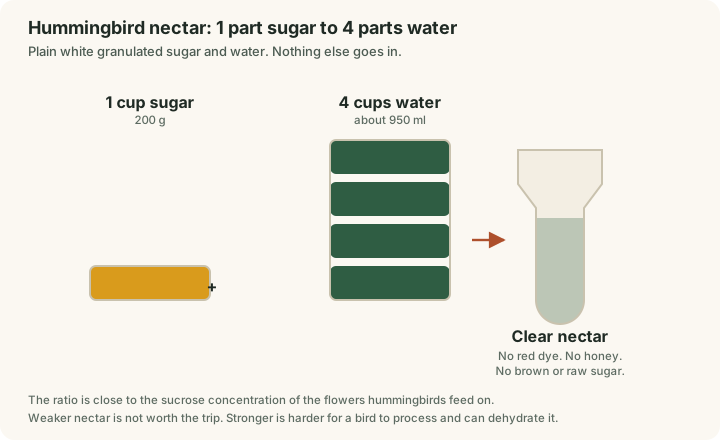
Ingredients: plain white granulated sugar and water. That is the complete list.
- Measure 1 part sugar to 4 parts water by volume. A standard batch is 1 cup of sugar (200 g) to 4 cups of water (about 950 ml), which fills most feeders with some left over.
- Stir until the sugar has completely dissolved. Warm or hot tap water does this in under a minute; cold water takes patient stirring.
- Cool to room temperature before filling the feeder. Hot nectar can craze glass and warp plastic, and no bird wants it.
- Fill the feeder, and refrigerate the remainder in a sealed jar for up to about two weeks.
Ordinary tap water is fine in almost all of North America. If your water is heavily softened, use bottled or filtered water instead, since softened water carries added sodium.
Fill less than you think
Most people fill a hummingbird feeder to the top and then throw most of it away. Fill only what the birds will drink between changes: for a single bird visiting a few times an hour, that may be a quarter of the reservoir. Less waste, and far less temptation to leave old nectar hanging because you hate pouring it out.
Boiling: what it does and does not do#
Boiling is optional. It has one real benefit, which is that it kills organisms already present in the water and sugar and so buys your refrigerated batch a longer, cleaner life. If you make a week's nectar at a time, boil it.
What boiling does not do is protect the feeder. The moment cooled nectar goes into a feeder that has been hanging outdoors, it picks up yeast and bacteria from the ports, the air, and every bird tongue that enters. Sterile nectar in a dirty feeder is dirty nectar within hours. The cleaning routine, not the boiling, is what keeps a feeder safe, and it is set out in cleaning a hummingbird feeder.
If you do boil, boil the water first and stir the sugar in afterward, off the heat. Boiling the mixture down concentrates it and changes the ratio you just measured.
What never goes in the bottle#
| Additive | Verdict | Why |
|---|---|---|
| Red dye or red concentrate | No | Unnecessary; feeder parts already provide the red. Not studied at feeder concentrations |
| Honey | No | Ferments fast in warm weather and supports fungal growth |
| Brown, raw or turbinado sugar | No | Retains iron and other residues; iron is a genuine concern for hummingbirds |
| Molasses, maple syrup, agave | No | Same problem as above, plus faster spoilage |
| Artificial sweeteners | Never | No calories at all. A bird drinking them is starving while it feeds |
| Powdered "nectar" with vitamins | Unnecessary | Hummingbirds get protein and micronutrients from insects, not from sugar water |
| Plain white granulated sugar | Yes | This is the entire ingredient list |
The red dye question comes up constantly, so it is worth being precise. There is no solid published evidence that dye at feeder strength harms hummingbirds, and there is also no evidence that it is safe. Since the birds respond to the red plastic on the feeder rather than the liquid, dye buys you nothing in exchange for that uncertainty. Choose a feeder with red parts instead; the designs are compared in hummingbird feeders.
Artificial sweeteners are lethal
A hummingbird burns through its energy reserves in hours. Sugar substitutes provide sweetness with no calories, so a bird that fills up on them gets nothing at all from a feeding visit. This is not a matter of degree, it is a matter of the bird starving at a full feeder, and it is the same reasoning that puts several human foods on the list in what not to feed birds.
Storage and shelf life#
Refrigerate spare nectar in a sealed glass jar for up to about two weeks. Label the jar with the date if you are the sort of person who will otherwise find it in September.
Signs a batch has turned: cloudiness, a sour or alcoholic smell, floating strands, or a film on the surface. Any of these and the whole batch goes down the drain, jar washed.
Nectar left at room temperature does not keep. Neither does nectar you pour back from the feeder into the jar, which contaminates the batch with whatever was growing outside.
How often to change nectar in the feeder#
The schedule is driven by temperature, not by how much is left in the reservoir.
| Daytime high | Change nectar every | Notes |
|---|---|---|
| Above 90°F (32°C) | 1 to 2 days | Full clean each time; move the feeder into shade |
| 85 to 90°F (29 to 32°C) | 2 days | This is the hot-weather standard |
| 75 to 85°F (24 to 29°C) | 3 days | Watch for cloudiness in humid spells |
| 60 to 75°F (16 to 24°C) | 3 to 4 days | Typical spring and fall interval |
| Below 60°F (16°C) | 4 to 5 days | Still change it; cool does not mean clean |
Cloudy nectar, black specks inside the reservoir, or a slick film on the ports means change it now regardless of what day it is. Shade helps more than anything else you can do: a feeder in full afternoon sun can be 15°F (8°C) hotter than one hanging under a porch roof, and spoils proportionally faster.
Run two feeders and rotate them
Keep a second feeder washed and dry indoors. On change day you swap the full one for the empty one and wash at your convenience instead of standing at the sink with a hummingbird watching an empty hook. It is the single change that makes a two-day summer schedule survivable.
Troubleshooting the feeder, not the recipe#
Most nectar complaints are feeder problems in disguise.
Nectar dripping onto the ground. Almost always an inverted-bottle feeder in the sun: the trapped air warms, expands and pushes liquid out through the ports. Fill it less full, hang it in shade, or switch to a saucer design.
Ants marching down the hanger. Fit an ant moat and keep it filled with plain water. Never use oil, grease or insecticide on the hanger, for the reasons laid out in ants in a hummingbird feeder.
Wasps and bees at the ports. Choose a saucer feeder where the liquid sits below the port, out of reach of shorter insect tongues, and skip yellow accents. More options in bees and wasps at hummingbird feeders.
Black mold in the ports. The feeder is not coming apart far enough during cleaning. If it cannot be fully dismantled, replace it; see choosing a hummingbird feeder.
Nectar is only part of the diet#
Hummingbirds get their protein, fat and minerals from small insects and spiders, not from your feeder. Sugar water is fuel, and nothing else. A yard with flowering native plants and no pesticide use supports hummingbirds far better than a yard with six feeders, which is the argument in native plants for birds and how to attract hummingbirds.
This is also why nobody needs vitamin-fortified powders. A ruby-throated hummingbird working your beebalm is catching gnats between visits, and an Anna's hummingbird overwintering on the West Coast is doing the same with midges on mild afternoons.
The two-minute routine#
- Mix 1 cup sugar (200 g) to 4 cups water (950 ml). Stir until clear. Cool.
- Fill only what will be drunk before the next change.
- Refrigerate the rest, sealed, up to two weeks.
- Change every 2 days above 85°F (29°C), every 3 to 4 days in mild weather.
- Clean the feeder at every change, not at every third one.
- Hang in shade if you have any choice about it.
Timing for the season, at both ends, is covered in when to put out hummingbird feeders and when to take them down. The short version of the second one: leaving a clean feeder up late does not keep a hummingbird from migrating.
Frequently asked questions#
What is the correct ratio for hummingbird food?
Four parts water to one part plain white granulated sugar, measured by volume. For a standard batch that is 1 cup of sugar (200 g) to 4 cups of water (about 950 ml). Stir until the sugar has fully dissolved, cool to room temperature, and fill the feeder.
Do I have to boil hummingbird nectar?
No. Boiling helps the sugar dissolve and slows spoilage in the batch you keep in the refrigerator, so it is worth doing if you make nectar in advance. It does not sterilize anything once the nectar is in a feeder that has been outdoors, so it is not a substitute for cleaning.
Is red dye bad for hummingbirds?
The honest answer is that nobody has shown clear harm at feeder concentrations, and nobody has shown safety either. What is certain is that dye is pointless: hummingbirds are drawn to the red plastic of the feeder itself, not to the color of the liquid. Given a choice between an unnecessary additive and no additive, skip it.
Can I use honey or brown sugar in hummingbird nectar?
No to both. Honey ferments quickly in a warm feeder and supports fungal growth. Brown sugar, raw sugar, turbinado and molasses all retain iron and other residues that plain white sugar does not, and iron is a genuine concern for hummingbirds. Plain white granulated sugar is the only sensible choice.
How long does hummingbird nectar last in the fridge?
About two weeks in a sealed container in the refrigerator. Nectar in a feeder outdoors lasts far less: two days above roughly 85°F (29°C), three to four days in mild weather. Cloudy liquid, floating strands or black specks mean it is already past due, whatever the calendar says.
Should I use a stronger sugar mix in cold weather?
There is no good evidence that you need to, and 4 to 1 is what you should use as the default all season. Some people mix a slightly stronger solution during cold snaps or fall migration on the theory it delivers more energy per sip. It is unlikely to do harm at moderate strengths, but it is not necessary, and going well past 3 to 1 risks dehydrating the bird.