
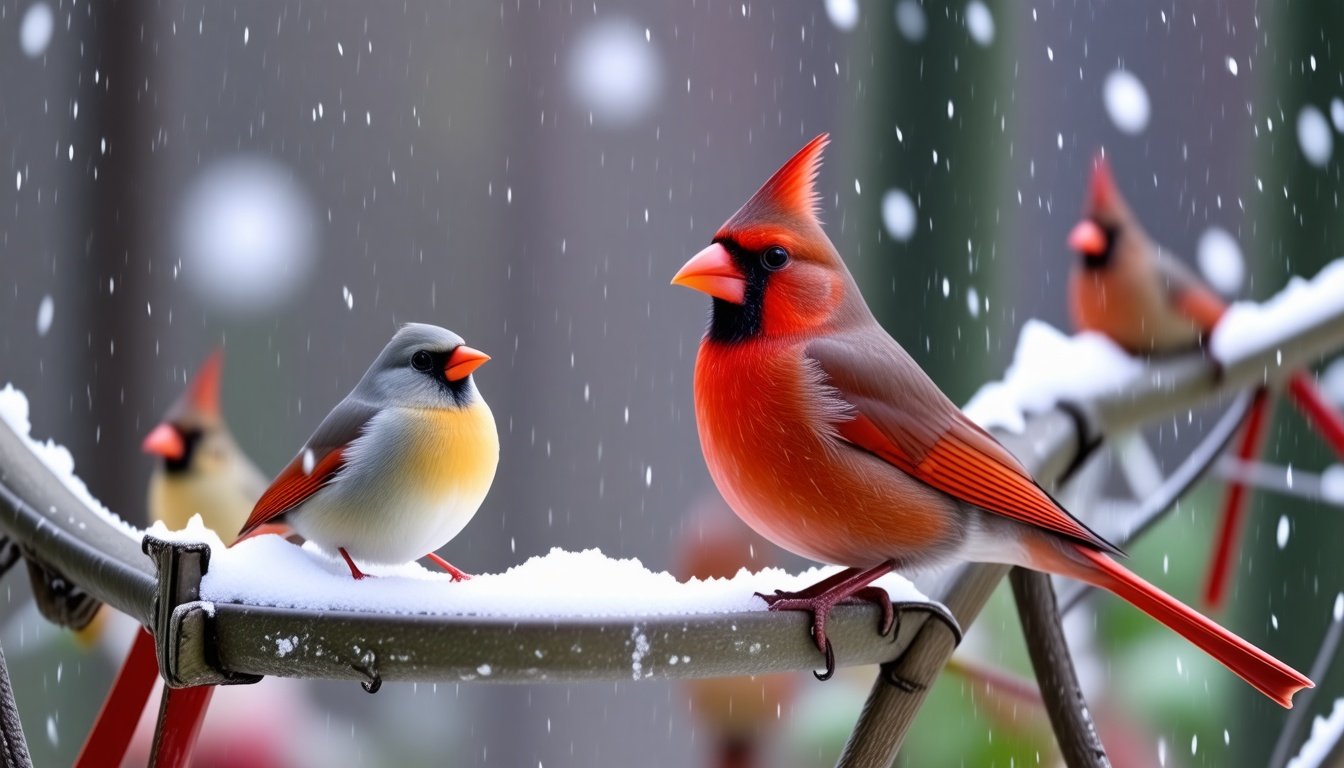
There is something quietly magical about sitting by a window on a cold morning, watching a bright flash of red dart from branch to branch. Cardinals. Those fiery red birds that seem to have stepped out of a storybook. They show up in the hush of winter, the burst of spring blooms, and the soft heat of summer afternoons. They flicker through the falling leaves of autumn too, like little bursts of scarlet in a world turning gold. Feeding cardinals throughout the year is not just about scattering seeds; it is a little dance with the changing seasons and a grown-up version of nature’s treasure hunt. You start to see them not only as birds but as tiny personalities, each with moods and moments shaped by the time of year. And the food? Well, it is as much about reading the seasons as it is about knowing what cardinals like.
Winter Warmth: Cardinals’ Scarlet Comfort Food
Winter can feel like a long, cold drawl, especially for wild birds. Their bright red feathers almost seem to glow against the snow, and they look like tiny fireworks against the gray sky. But winter is a hard season for cardinals. Food is scarce, and they need bursts of energy to keep warm all day long. This is when feeding cardinals feels both rewarding and essential.
Seed mixes with black oil sunflower seeds are probably the cardinal’s favorite winter snack. Why? Because sunflower seeds are packed with fat and calories — the kind of stuff that helps cardinals survive freezing nights. These seeds are relatively easy to crack open, and cardinals have strong beaks that work like little nutcrackers. If you want to see a cardinal “work” for its food, just watch them wrestle a sunflower seed out of its shell. It is a slow-motion drama, and a treat for watchers.
Another winter option is safflower seeds. Cardinals like these, but many other aggressive birds, like squirrels and sparrows, do not. Using safflower seeds is a little trick to keep the cardinals coming back while discouraging other visitors who might gobble everything up too quickly.
One thing to remember in winter: water freezes. Birds still need water, maybe even more than in summer. So a heated birdbath or a shallow dish filled with fresh water (changed often) can make your backyard a bustling cardinal hangout.
Spring: The Season of New Beginnings and Feeding Tweaks
Spring arrives with the subtle explosion of color and life. For cardinals, it is a busy time. They are focused on mating, nesting, and setting up a new family. You will notice males singing louder, fluffing their feathers more, and showing off their bright red armor. Females, more subdued with soft browns and reds, are busy too, gathering nesting materials and making the rounds for food.
During this season, cardinals still crave sunflower seeds, but they are also searching for protein to feed their hatchlings. Mealworms, which are little wriggly critters, are an excellent addition to your feeding station because they supply the protein baby birds need. Live mealworms attract birds like a magnet, but freeze-dried ones work well too and are easier to manage if you do not want the fuss of live insects around.
Have you ever noticed how cardinals also seem to enjoy fruits? Small chunks of apples, oranges, and berries can add a nice touch to your spring feeding area. Think of it as spring’s fresh salad bar for birds. They do not eat these in huge quantities, but those juicy bits give variety and nutrients that a simple seed mix cannot.
Now, a little warning: spring also brings hungry baby squirrels and rowdy sparrows who might dominate the feeder if you let them. Spacing out feeders or using feeders designed for cardinals (wide, sturdy perches and big openings) can help keep the cardinals feeling like VIPs rather than background noise.
Summer: Hot Days and Lightweight Snacks
Summer is the season when cardinals are mostly busy keeping their youngsters alive and healthy. You might see more frequent visits but shorter feeding sessions. Why? The world outside is exploding with natural food — insects, berries, seeds — so your feeder becomes just one option rather than the mainstay.
Because cardinals are feeding babies, they tend to eat more insects during summer. You can keep offering mealworms, which are a great protein source, or even plant native berry bushes near your feeders. Plants like dogwood, mulberry, or serviceberry attract cardinals naturally and give them fresh snacks on the go.
Cardinals also appreciate fresh water. Summer heat can make it tough for birds to stay hydrated. A birdbath, especially one with a gentle drip or fountain, can become a cardinal’s favorite hangout. It offers not just drinking water but a place to splash and cool down. Watching a cardinal take a bath is a pure joy — it is like they forget everything else and just enjoy the moment.
Keep your feeders clean and filled during summer because warm weather encourages mold and bacteria that can harm birds. Clean feeders are happy feeders, and happy feeders mean more cardinal visits. It is a simple trade-off that is worth every minute of scrubbing.
Autumn: The Season of Preparation and Color Change
Autumn is like the calm before the winter storm for cardinals. They are busy eating and storing energy to get ready for colder months. Their bright red feathers look particularly crisp against the golden and rust-colored leaves. For us, it is a chance to see them in a new light — bold and brilliant against autumn’s warm canvas.
Seeds remain king in autumn. Sunflower seeds keep their place, but cardinals will also snack on cracked corn and millet as natural foods start to fade. You can switch up your seed mix to include these to provide energy-packed meals that prepare them for winter.
Fruits and nuts also make a comeback in autumn. If you can get your hands on shelled peanuts, that is an excellent addition. Cardinals love them, and peanuts provide a solid energy punch. Be sure to use unsalted peanuts, and remember to throw some on a platform feeder where these big birds can peck comfortably.
Gardening friends might have noticed that leaving some native plants’s seed heads can be a quiet help to birds. Letting sunflowers grow for seed or leaving dead stems with burrs and berries give cardinals extra snacks when feeders run low or when they want to forage naturally.
Feeding Cardinals: A Year-Round Relationship
Feeding cardinals is not just about throwing seeds in a feeder. It is a connection to the rhythms of nature, watching how these fiery birds change with the seasons and adjust their tastes and habits. From winter’s hunger and need for fat-loaded seeds to summer’s protein-packed insects and cooling baths, cardinals show up in different ways all year long.
There is a quiet joy in knowing that you are part of this cycle, a little helper in the bird’s story. It is more than a hobby or a casual pastime — it is a small, daily reminder of the world turning, life continuing, and the simple pleasures that come with a flash of red in the backyard.
So, next time you fill your feeder or clean your birdbath, take a moment. Listen for the cardinal’s song, watch their clever beak work on that sunflower seed, or catch the sparkle of their feathers in the sun. These little red birds are not just visitors. They are friends joining you every season, one seed at a time.